Portaging to the capital: How an Indigenous portage linked a country to its future

This may be one of Canada's most important portage trails historically, providing a strategic military link between Kingston's Fort Henry and the rest of the country. The Rockcliffe Park to Stanley Park portage proves how Ottawa was the best choice for Canada's capital. For eons, Indigenous peoples have canoed through this region, portaging over land to access waterways and bypass obstacles (rapids, falls, and other non-navigable sections). To get around Rideau Falls from the Ottawa River to the Rideau River and then on to Kingston and Lake Ontario, required a portage. From this spot, a paddler truly could access the whole of North America. Shortly after the first settlers came to this area in 1800, this Indigenous portage would have provided a valuable link between Kingston's Fort Henry on Lake Ontario to Montreal and the Upper Great Lakes during the War of 1812. As a backdoor to Kingston, it enabled supply and messenger vessels to avoid confronting the American naval forces on Lake Ontario to secure our territory. Later, this provided decision makers a valuable lesson why Ottawa would make the obvious choice for the capital city.

Our walk guide will retell the story of his own teen-aged French Canadian ancestor Antoine Godard dit Lapointe, who served in the Canadian Voyageurs Corps that supplied various forts during the War of 1812, following the routes of his other Indigenous ancestors.

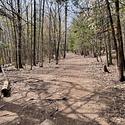
The walk begins at the Ottawa River in Rockcliffe Park and ascends a gentle slope with uneven ground along a trail leading to the edge of the Rideau River.

At the start of this walk, John will call upon the National Capital Commission (NCC) to re-establish a new canoe launch at a known Indigenous encampment, as based on archaeological evidence. This would be the first canoe launch to commemorate an Indigenous paddling presence on the river for millenia, honour the role of the Canadian Voyageur Corps, and serve the needs of today's paddling community to re-establish a natural connection between the two rivers.

This route was originally mapped by John Savage in collaboration with non-Indigenous people during the pandemic, who used his intellectual property without acknowledgement to secure funding from various levels of government for a trail commemoration. John will be reclaiming his story about the use of the waterways and portages on behalf of the Indigenous community, to re-assert their Indigenous right to tell their own stories and interpret their own history in accordance with the Truth And Reconciliation Commission's Calls to Action. He will reaffirm how the City of Ottawa, Federal Government, and other non-Indigenous funding agencies need to stop funding pretendian organizations that push aside Indigenous people to corrupt their stories and intellectual property.

This portage walk will help demonstrate an opportunity for our community to take back our paddling heritage on the Ottawa River on behalf of everyone. It will also provide a nice little route you can take your friends and family along to retell the story of how why this portage may be a key reason why Ottawa became our capital.
Location
Route

Our walk starts at Rockcliffe Park's pavillion after the CN Cycle for CHEO, near an ancient Indigenous encampment site. The walk will follow a traditional Indigenous portage route between the Ottawa River (also known as Kichi Sibi) and the Rideau River that was mapped out during the pandemic. The trail meanders through a forested area with a steep uneven section and then skirts the grounds of Rideau Hall and follows the streets through New Edinburgh, ending at the banks of the Rideau River near the intersection of Crichton St. and Beechwood Ave..


After the walk, participants are encouraged to remain in the area and visit the restaurants along Beechwood or walk through New Edinburgh, one of Canada's most famous neighbourhoods that overlays the ancient Indigenous presence in our capital city.


Accessibility: The route has unpaved trails, paved walks, and some hills to climb. Some may want to use walking poles for stability and balance, while most should be fine with just sturdy walking shoes.


Participants may park in Rockcliffe Park in one of two parking lots or at the NCC Parking Lot #2, near the Rockeries, which is walking distance to the Pavilion (big gazebo) where we will gather. If that parking lot is full, you can park at the next one further up the road (northeast) at the Rockcliffe Lookout and walk back. There is also street parking along Rockcliffe village streets on the east side of the Sir George Etienne Cartier parkway. This walk follows the CN Cycle for CHEO that should be concluded by 1 pm, so don't arrive too early.

About the walk leader

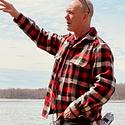
John Savage is a resident of Pointe-Gatineau and a veteran Jane's Walk walk leader. He has shared his skills as an canoe and rowing guide, organizer, lobbyist, and community activist to protect and promote the river community, its archaeological history, and the natural environment for all to enjoy. As a Métis (Chippewa, French, & British) whose ancestors traversed this area, he has a familial connection to the area possibly spanning 7,000 years, and a Metis heritage that is largely based on the fur trade, professional rowing, and athletics. John's work with Jane's Walk Ottawa-Gatineau has influenced waterfront development, including the installation of Gatineau's first canoe and rowing launch site. He aims to do the same on the Ottawa side of the river next, so this walk will include discussion about the challenges in implementing citizen-led change in our community.

Guide:

John Savage

When:
Date:Sun May 3, 2026
Time:2:00 PM
Duration: 1 hour 15 min
Language: English
Where:
Start: Rockcliffe Park Pavilion
End:New Edinburgh Park near Beechwood
Area:Rockcliffe Park
Distance:2.5 kms
Accessibility:

The uphill portion of the walk is unpaved nature trails.

Walker Sign-up

Signing up is not required for this walk. If you plan to attend, by signing up you will help us estimate the group size. Please submit your email and the number of walkers that will be attending with you below.

Gallery
On the Indigenous portage trail near Princess Ave. & Lisgar Rd, Rockcliffe. Route of the Indigenous portage between the Otttawa River and the Rideau River. John Savage guiding a walk near the trailhead on Portage Bay. The portage trail crosses the Poets' Pathway, where two plaques are installed commemorating the Confederation Poets. Looking North along the bank of Portage Bay on the south side of the Ottawa River, near the portage trailhead.  Point Gatineau can be seen in the distance on the north side of the river.
Volunteer to Marshal Our Walks